Astronomers, using the James Webb Space Telescope, uncovered six planet-like rogue worlds roaming among the stars. Each of them are five to 10 times the size of the gas giant Jupiter, and have remarkably lower masses compared to stars and brown dwarfs typically formed by the same process.

Exploration began with a deep spectroscopic survey of star cluster NGC1333 captured by Webb’s NIRISS or Near Infrared Imager and Slitless Spectrograph. This young cluster lives in the constellation of Perseus, about 960 light-years away. Previously observed by the Hubble and Spitzer Space Telescope, this region is known as a hub for “messy” star formation.
“We used Webb’s unprecedented sensitivity at infrared wavelengths to search for the faintest members of a young star cluster, seeking to address a fundamental question in astronomy: How light an object can form like a star?” said senior study author Ray Jayawardhana, provost and astrophysicist at Johns Hopkins University, in a statement. “It turns out the smallest free-floating objects that form like stars overlap in mass with giant exoplanets circling nearby stars.”

According to a study recently published in the Astronomical Journal, these isolated bodies meet the criteria of free-floating planetary-mass objects, as defined by their masses and their lack of orbit around a star. Astronomers are calling them “rogue worlds” because they wander through space untethered to any star. What scientists are learning is that the same process that produces stars, could potentially form objects with planetary masses like that of Jupiter.
“We are probing the very limits of the star forming process,” said lead author and Johns Hopkins astrophysicist, Adam Langeveld, in a statement. “If you have an object that looks like a young Jupiter, is it possible that it could have become a star under the right conditions? This is important context for understanding both star and planet formation.”
Although out of touch with nearby stars, some strong and independent rogue worlds can still be orbited by smaller planets – like the brown dwarf scientists found. This dwarf, with an estimated mass of about five Jupiters or 1,600 Earths, according to Langeveld, is what interests this team of scientists the most. The space dust ring surrounding the planet can indicate the process of star formation was underway at some point in its creation. Space dust, however, is central to the early stages of star and planet formations. This suggests that scientists could have stumbled upon evidence of the creation of a “mini” planet.
“Those tiny objects with masses comparable to giant planets may themselves be able to form their own planets,” co-author Alexander Scholz and University of St Andrews astrophysicist said. “This might be a nursery of a miniature planetary system, on a scale much smaller than our solar system.”
The team of researchers will continue to use Webb to study brown dwarfs, gas giants and this newfound potential for miniature planetary systems.
The future of roaming rogues with Roman
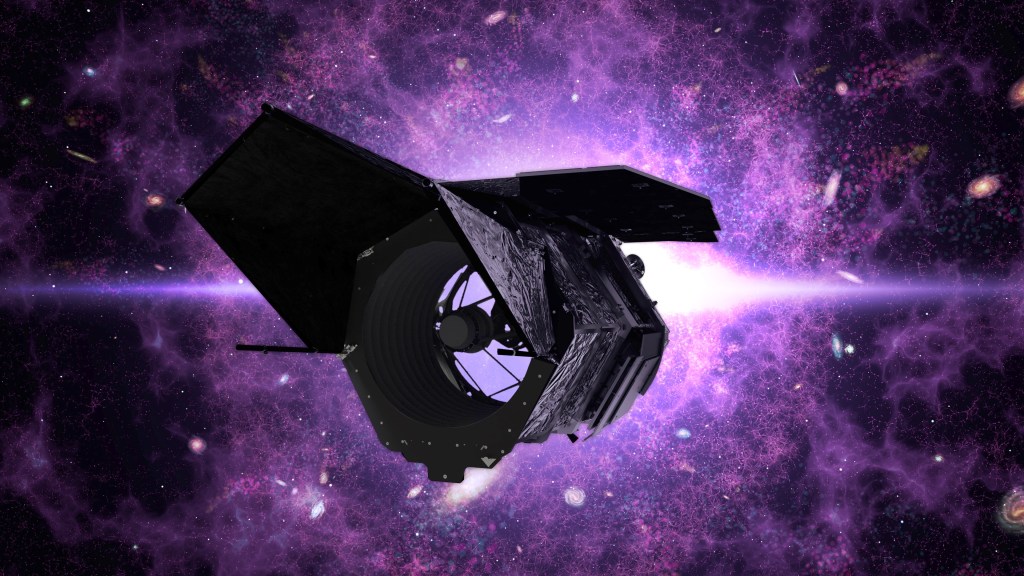
NASA’s Nancy Grace Roman Space Telescope, based at the Goddard Space Flight Center in Greenbelt, Md., is set out to delve even deeper into these rogue worlds. Equipped with a 300-megapixel infrared camera and a powerful coronagraph, it could have the strength to identify rogue planets thousands of light-years away from Earth. According to NASA, Roman will work 1,000 times faster and the field of view will be 100 times bigger than that of Hubble.

 The Exploratory Journal